
ATSC Installation & Field Configuration

Adaptive Traffic Signal Control (ATSC) Installation & Field Configuration

As specialized ITS professionals, we bridge the gap between advanced adaptive software and physical reality. We partner directly with ATSC manufacturers and municipal traffic engineers to handle the heavy lifting, precise wiring, and initial field configuration required to bring these smart corridors online. Adaptive Traffic Signal deployments include:

1. Controller & Cabinet Upgrades
We prepare your intersections for adaptive technology by upgrading the localized hardware.

  • ATC Installation: Swapping legacy controllers for modern Advanced     Transportation Controllers (ATCs) capable of handling adaptive algorithms and high-resolution data.
  • Cabinet Integration: Modifying or upgrading NEMA, Caltrans, or ATC cabinets to accommodate new edge-processing devices, power supplies, and network switches.
  • Fail-Safe Verification: Wiring and testing localized fail-safes to ensure the intersection smoothly reverts to time-of-day (TOD) backup plans if communication with the central adaptive server is ever lost.

2. Advanced Detection System Deployment
We install the highly accurate, multi-modal detection hardware that feeds vehicle, pedestrian, and transit data into the ATSC software.
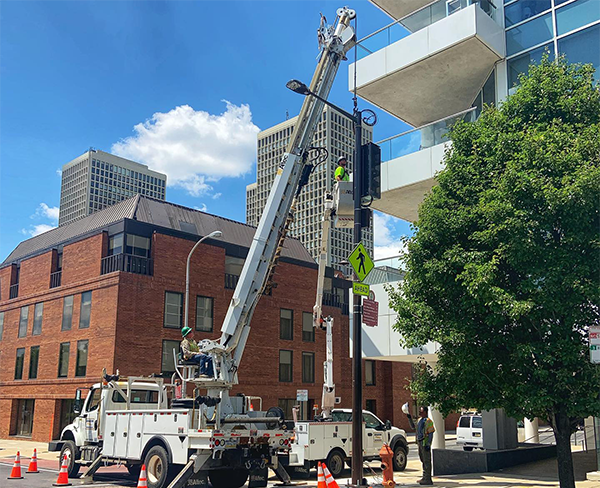
  • Camera & Sensor Mounting: Installing and aligning video detection cameras, LiDAR, or radar units on mast arms and luminaire poles.
  • Wiring & Termination: Pulling durable, shielded cabling from the detection units down into the traffic cabinet, ensuring clean, weather-tight terminations.
  • Detection Zone Setup: Performing the initial field configuration to map out detection zones, stop-bars, and advance warning areas within the sensor's localized software interface.
3. Network & Communications Integration
  • Backhaul Connectivity: Terminating fiber optic connections or aligning Point-to-Point (PtP) wireless radios to link the corridor together.
  • IP Configuration: Assigning localized IP addresses and configuring field switches to ensure the edge devices can securely communicate with the central ATSC server.


4. Field Turn-Up, Validation & Testing
We work alongside the manufacturer's remote support teams and local traffic engineers to validate the system in live traffic.

  • I/O Verification: Confirming that the physical inputs (sensor calls) are accurately registering in the adaptive software, and that software outputs (phase changes) are correctly triggering the signal load switches.
  • Burn-In Testing: Monitoring the newly installed system during peak and off-peak hours to identify false calls, missed detections, or communication drops.
  • Emergency Preemption Checks: Testing Opticom or other Emergency Vehicle Preemption (EVP) systems to ensure the adaptive software properly relinquishes control to emergency responders and successfully recovers its timing cycle afterward.

Future-Ready & Scalable Infrastructure

Our approach ensures that every adaptive traffic signal deployment is built with long-term flexibility in mind. The systems we install are designed to support emerging technologies, including advanced analytics, artificial intelligence (AI), and connected vehicle applications. By implementing high-resolution data collection, robust communications, and modular hardware architectures, we position each corridor to seamlessly integrate future software enhancements and evolving transportation strategies—without requiring costly rework in the field.
Intelligent Transportation System (ITS) Projects

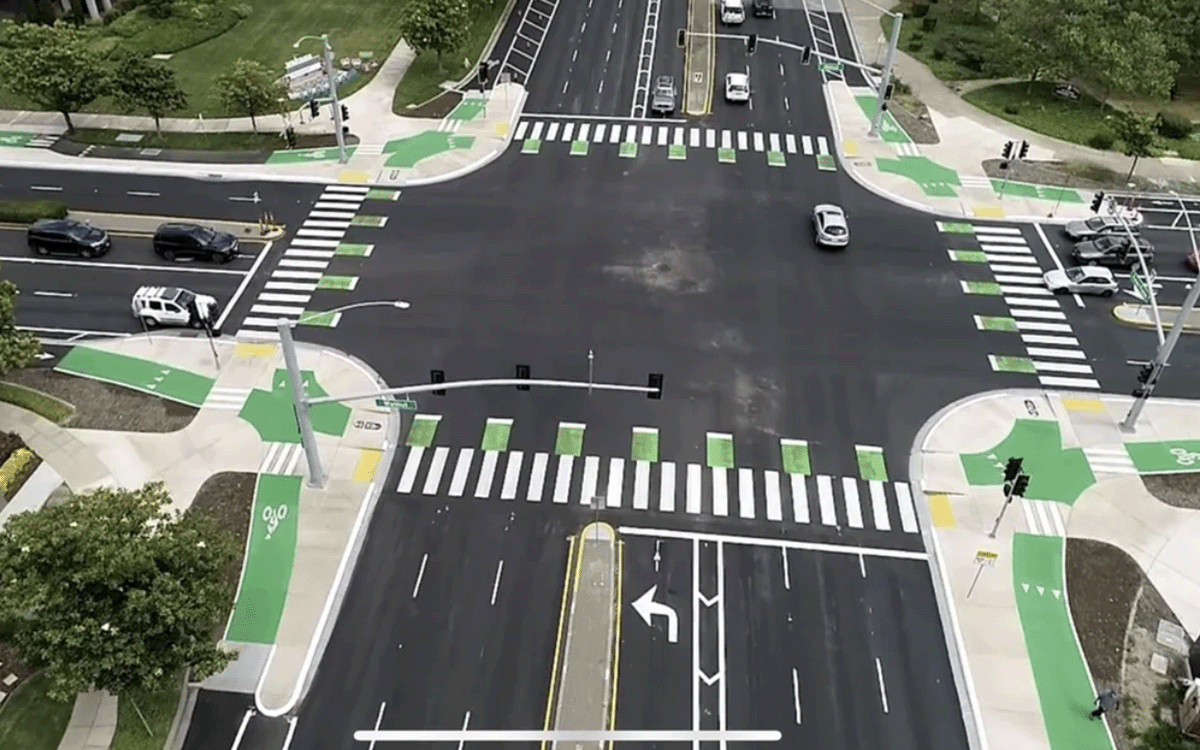
Fremont smart corridor shot of intersection

Fremont Safe and Smart Corridor

Click to read more
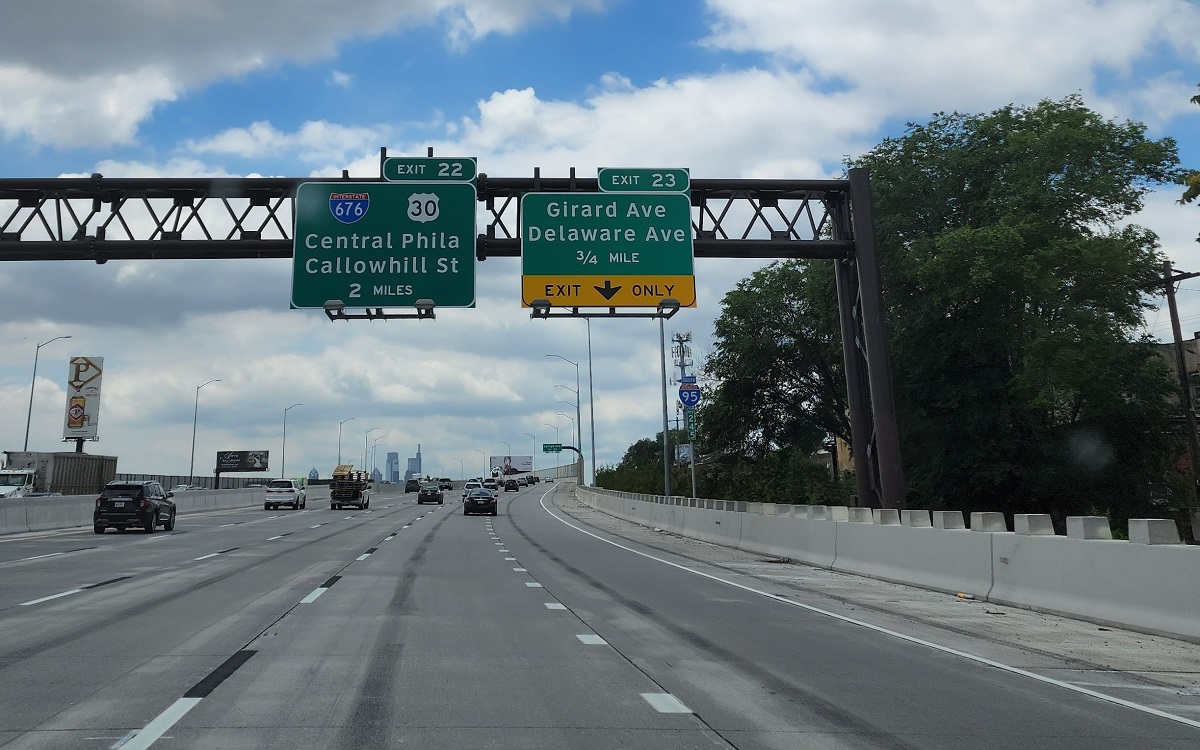
Highway overhead signage

I95: Intelligent Transportation System

Click to read more